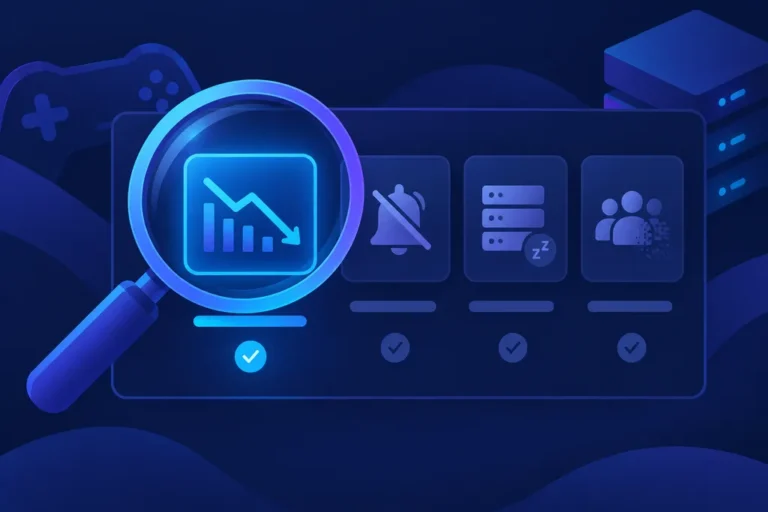
A game can be struggling for months before anyone calls it dead — and the internet is full of confident verdicts based on a single data point. This guide teaches the investigative middle ground: which signals actually indicate decline, which are false alarms, and how to combine them before an official announcement exists. If you’re…
Splinterlands is a card-battler on the Hive blockchain — and yes, you can genuinely start for free. A free account gets you through the tutorial Campaign and into Frontier, the beginner format where you earn your first cards, all without a wallet or a purchase. The paid layer exists, but it’s a choice you make…
Off The Grid is one of the most-streamed “NFT games” — and also one of the most misunderstood. Gunzilla Games’ own FAQ states it directly: it is a battle royale with an optional NFT element, playable entirely without touching crypto. This guide covers the actual beginner path — where to get it, what an account…
Illuvium isn’t one game — it’s a franchise of connected products at different stages, and the “how do I start” answer depends entirely on which one you mean. The short version for 2026: Arena is the free public entry point, Zero is the free companion city-builder, Beyond is the browser collectible experience, and Obelisk Rising…
NFL Rivals is the NFL’s officially licensed arcade football game for phones — free to play, built by Mythical Games, and quietly the most mainstream on-ramp to NFT player cards anywhere. The start is simple: install the official app, play, and ignore the web3 layer entirely until you want it. The game’s Year 3 rebuild…
FIFA Rivals is the officially licensed FIFA arcade football game for phones — free, built by Mythical Games, and currently mid-season: the Fresh Ink 2026 season kicked off September 17, with weekly content running year-round. The start is a straight line: install the official app, play, and leave the NFT layer alone until you actually…
The NFTVideoGames registry passed a hundred tracked games on September 22, 2026 — 103 records, each carrying a status verified against primary sources and a dated re-review. This is a snapshot of what that set contains as of that date: who is alive, who is not, who is dying, and what the distribution says about…
Does paying to start an NFT game make it likelier to survive? Across the 165-record registry, the answer is flatly no — and the honest version is more interesting than either marketing story. Charging entry never protected a game; the specific place a game put its NFT layer did. The numbers, by access model “Endings”…
A licensed IP is supposed to be the safest foundation an NFT game can have — a built-in audience, real brands, official sanction. The registry’s licensed set tells a different story: a third of the twelve licensed-IP records have already ended, a worse share than the registry average — and in two of the four…
“The game moved to another blockchain” sounds like one event. In practice it can mean several very different things — cards bridged to a new network, balances moved to a different chain than the assets, contracts redeployed while old ones freeze, or a game shut down entirely while its assets were absorbed into a wider…