Is My NFT Game Dead? How to Check a Game’s Real Status
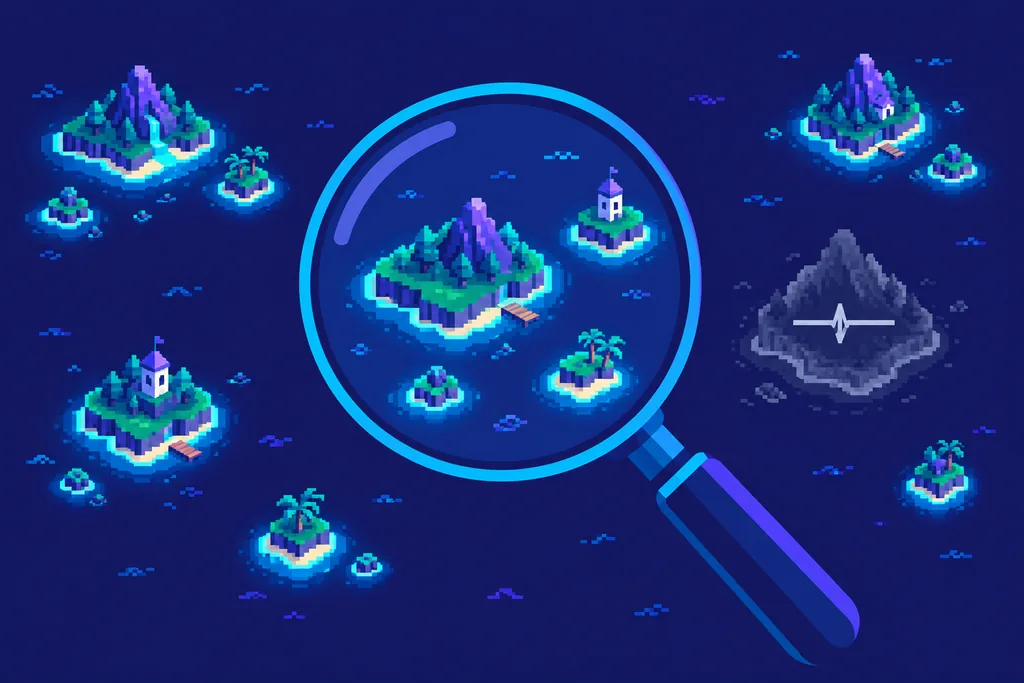
Blockchain games die quietly. The website stays up, the token still trades, and nobody announces “the game is dead” — so most directories keep listing projects that stopped years ago. Here’s how to check a game’s real status yourself, and how our registry labels what it finds.
Why “is it dead” is harder than it sounds#
Three things fool the casual check. A zombie site — marketing pages and Discord survive long after development stops. Silent teams — updates slow to nothing without ever saying so. And token-only life — an asset still trading proves nothing about the game; marketplace activity is not evidence a game is alive.
The status labels we use#
Every record in the registry carries one of eight statuses, each with a verification date:
- Active — playable and receiving official updates or events within roughly the last 90 days.
- Early access — publicly playable, officially unfinished.
- In development — announced, not yet playable.
- Paused — officially frozen, may return.
- Pivoted — the product materially changed scope.
- Sunset — a feature or version retired while the studio lives on.
- Shut down — servers closed or the team ceased.
- Unknown — the honest default when evidence is insufficient.
The checklist#
- Official channels first. The game’s own blog, status page, release notes, or developer announcements — date-stamped. A patch or season announcement inside ~90 days is strong evidence for active.
- Development cadence. One relaunch trailer isn’t life; look for an update pattern.
- Playability right now. Can you actually install/log in and play? “Coming soon” for two years isn’t early access — it’s in-development at best.
- Reputable secondary coverage — established Web3 gaming press — for shutdowns and pivots where official statements are buried or absent.
- Never marketplace volume. Tokens and NFTs trading is a finance signal, not a game signal.
Worked example 1: a clean shutdown#
Pirate Nation announced it would cease operations in August 2025, went offline September 18, 2025, and decommissioned its two Arbitrum L3 chains. The studio, Proof of Play, ceased operations entirely on August 4, 2026 — open-sourcing the code and releasing the art under CC0. Official confirmation plus multiple verified reports: unambiguous shut_down.
Worked example 2: a sunset, not a death#
Axie Infinity: Homeland was officially sunset on June 17, 2026 — replaced by Terrariums, Sky Mavis’s new land layer, with Axie Origins continuing actively. The game is gone; the studio and ecosystem are alive. That’s sunset, and the distinction matters if you’re deciding where your assets stand.
How our registry verifies#
Every record carries its status, the evidence behind it, a last-verified date, and a computed next-review date based on how fast that status can rot — 90 days for active titles, a year for confirmed dead ones, 30 days for unresolved “unknown”. Records that run overdue get publicly flagged “re-verification pending” rather than displayed as fresh. Status changes require a documented evidence trail, and downgrades need official confirmation or two independent verified reports.
And your assets?#
The tokens typically survive the game — what ownership means after a shutdown is covered in the ownership guide. New to all of this? Start with the beginner’s guide.
Sources#
- The Defiant — Proof of Play shuts down, open-sources code and art
- Official Axie blog — Terrariums V1 live, “Homeland has officially sunset”
- Official Axie blog — Origins Season 18 postseason (active example)
- Registry records — statuses verified 2026-09-18 with linked evidence.
This guide was verified against primary sources on 2026-09-18.