
What Happens to Your NFTs When a Blockchain Game Shuts Down
When a blockchain game closes, your NFTs usually stay on-chain — but “still existing” is not the same as “still useful.” What happens to game assets depends on how the game ends: a sunset with a successor, a studio collapse, a marketplace closure or a community takeover all produce different outcomes for the same wallet.
What does “shutting down” actually mean?#
“The game shut down” is shorthand for several different events, and the difference matters for what happens to your assets:
- Full shutdown: the developer closes the servers and ends all support, with no successor announced.
- Sunset to a successor: the game ends on a stated date because the developer is replacing it with a different product.
- Developer withdrawal: the developer stops operating or building the game, but the game may remain playable or pass to the community.
- Studio closure: the company behind the game ceases operations, which may or may not take the game down with it.
- Marketplace or platform closure: the game keeps running, but the venue used to buy, sell or manage its assets closes.
- Licensing or IP loss: the game must close because it no longer has rights to the underlying brand — a business event, not a technical failure.
Each of these produces a different answer to “do I still own my items?” — which is why the first step is always identifying which event actually happened.
Your NFT can remain on-chain after a game ends#
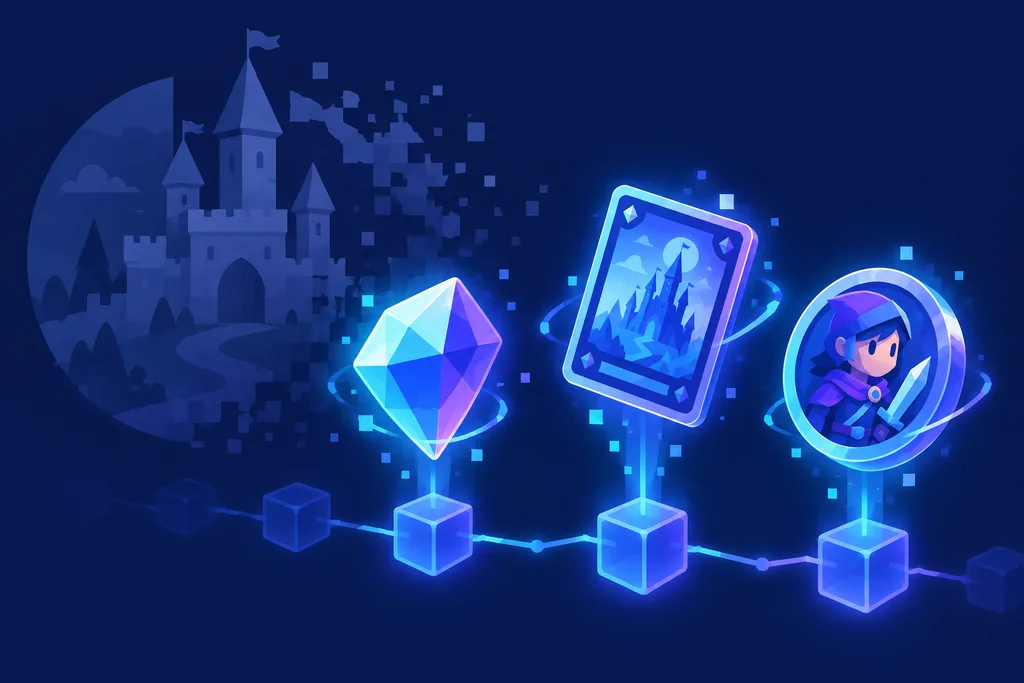
The most common misunderstanding in shutdown coverage is treating the NFT and its game utility as one thing. They are separable layers:
- Existing on-chain: the token contract still exists and your wallet still holds the token. This almost always survives a shutdown — the blockchain does not turn off when a company does.
- Transferable: you can still move the token between wallets or list it on a marketplace. Transferability depends on the contract, not the game.
- Recognised by the game: the game’s systems read your token and treat it as a card, character or item. This ends the moment the game stops running or stops checking.
- Useful: the token does something — grants access, produces resources, functions in gameplay. Utility ends when nothing consumes the token anymore.
- Metadata accessible: the image, name and attributes attached to the token still load. If metadata is hosted on the developer’s servers, it can disappear even while the token remains.
An NFT can persist at the first two layers while losing everything below them. The token becomes a record of ownership of an asset that no longer does anything — transferable, viewable in a wallet, but inert. Whether anything else survives depends on what the developer and the surrounding ecosystem do next.
What can happen to game NFTs?#
Documented shutdowns fall into a handful of recurring outcomes:
- Assets remain but lose all utility. The most common outcome: tokens stay on-chain, transferable and viewable, but no running game recognises them. Market demand typically evaporates alongside utility.
- Assets migrate to another product. The developer swaps or converts holdings into assets for a different game or ecosystem — the old NFT is exchanged rather than carried over.
- A distinct successor replaces the game. The original ends on schedule and a new product launches; the successor may honour nothing from the old game, or only parts of it.
- Code and assets are open-sourced. A closing studio releases the game’s code, contracts and art so the community or other builders can continue or repurpose it.
- The community takes over. The developer steps back from competitive or development roles while the game remains online under community governance.
- The marketplace closes but the NFTs persist. Because tokens live on-chain, a marketplace shutdown usually leaves the assets tradeable elsewhere.
Real shutdown and transition examples#
Pirate Nation — studio closure, open-sourced#
Proof of Play, the studio behind the fully on-chain game Pirate Nation, announced on August 5, 2026 that it was ceasing operations. Rather than letting everything go dark, the studio open-sourced the Pirate Nation Unity app and smart contracts on GitHub and released the game’s artwork, logos and Founder Pirates NFT art under a CC0 public-domain licence.
The Pirate Nation game itself ended. An independent Pirate Nation Foundation said it would continue maintaining the PIRATE token and keep a website operational — that is a separate entity supporting a token, not the original game continuing. Proof of Play’s own points programme became non-redeemable. The NFTs still exist on-chain and the art is now public domain, but the application that gave them game utility is gone. See the Pirate Nation registry profile for the verified record and our full case study, Pirate Nation: What Actually Happened?
Axie Infinity: Homeland — sunset, replaced by Terrariums#
Homeland sunset on June 17, 2026, the same day Sky Mavis launched Terrariums V1 — a distinct successor, not a rename. Homeland progression did not carry over, and the delegation system that let landowners lend plots was revoked automatically. Player NFTs on Ronin remain on-chain, but the game that recognised them no longer runs. See the Homeland registry profile and our guide to which Axie games are still alive in 2026.
Axie Classic — developer steps back, still playable#
Axie Classic is the sharpest example of why “shutdown” language needs care. Season 16, which ended September 10, 2026, was the final competitive season under Sky Mavis’s direct structure — but the game remains online and playable while a transition toward community governance continues. The eventual structure is still unsettled. Calling Classic “dead” would be wrong; so would calling the handover finished.
F1 Delta Time — licensing loss, asset migration#
When Animoca Brands could not renew the Formula 1 licence, F1 Delta Time ceased operations on March 16, 2022 — a shutdown caused by IP rights, not by the game failing technically. Owners were offered swaps: F1 Delta Time cars converted to equivalent REVV Racing assets on Polygon, crates and keys could be bridged into earning pools, and other assets could be swapped for proxy assets. It is the best-documented case of a developer actively migrating holdings into a surviving ecosystem.
GameStop NFT marketplace — the platform closes, the NFTs stay#
GameStop closed its NFT marketplace in February 2024, citing regulatory uncertainty. Its own closure notice made the on-chain point explicitly: “Your NFTs are on the blockchain and will remain accessible and saleable through other platforms.” The marketplace was an interface; the underlying tokens on Immutable X and Loopring were unaffected. This is the useful contrast to a game shutdown — losing a venue is not the same as losing the game.
What should you check when a game is shutting down?#
When a shutdown or transition is announced, work through these questions before assuming anything about your assets:
- Has the developer announced a shutdown, a sunset, or a transition? They are different events with different outcomes.
- Is there a successor product, and is it a continuation or a separate game?
- Are assets being migrated, swapped or redeemed — and is there a deadline or official process?
- Does progress, ranking or account data carry over? (Often it does not — check the official source rather than assuming.)
- Are the NFTs recognised by any other game or successor?
- Where is the token metadata hosted — on-chain, IPFS, or the developer’s servers?
- Is the game’s marketplace or a third-party marketplace still operational for these assets?
- Who controls the contracts and infrastructure now — the developer, a foundation, or the community?
Anything not covered by an official announcement is genuinely unknown — undocumented outcomes are common, so label gaps as unknown rather than assuming either direction.
How to verify a game’s status#
Game shutdown claims travel faster than the facts. Before acting on an asset, work through the same verification process we use: our guide to checking whether a game is actually dead walks through official channels, on-chain signals and the checks that separate a rumour from a sunset.
Our NFT games registry keeps date-stamped, source-backed status records for the games we track — but a registry can only tell you what is verified, not what is certain. It records what official sources say today, not what will happen tomorrow. For what your in-game NFTs actually do while a game is live, see what game NFTs actually do.
Sources#
- Pirate Nation Studio Proof of Play Shuts Down, Open-Sources Code and Art — The Defiant, August 5, 2026
- Terrariums V1 Is Live — The Lunacian, June 17, 2026
- Axie Classic Competitive Season 16 — The Lunacian, August 12, 2026
- F1® Delta Time to cease operations; announces rewards for supporters — Animoca Brands, March 15, 2022
- GameStop Bails on Crypto Gaming, Killing NFT Marketplace — Decrypt, January 13, 2024
This guide was verified against primary sources on 2026-09-18.
